What Trained Retrieve Really Means

Updated: Aug 9
Bird dog people often use the terms trained retrieve and force fetch to describe the same general process.
The words can make owners nervous, especially when they have seen the work rushed or handled badly.
To me, trained retrieve is not about overpowering a dog. It is about teaching the dog that the retrieve is a complete job.
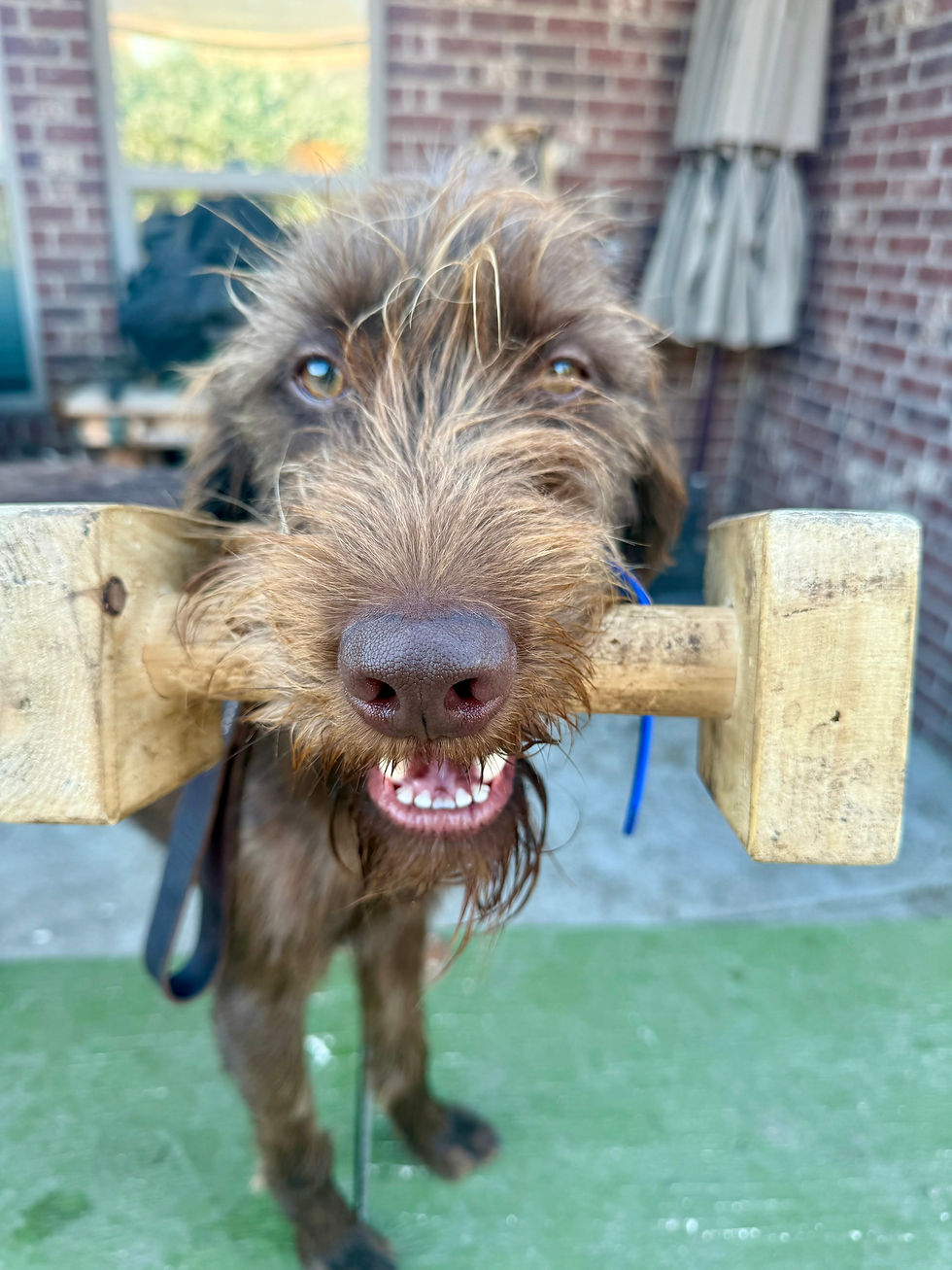
The dog learns to pick up when asked, hold calmly, return to the handler, deliver cleanly, and release on command. It learns that the job does not end just because the easy part is over.

Natural desire comes first
I want young dogs to enjoy retrieving.
A puppy that chases, picks up, carries, and wants to return gives the trainer something valuable to build on.
Early work should encourage that desire. I do not want every puppy retrieve turned into a formal test.
The problem is that natural desire does not always create reliability.
A dog may retrieve a bumper in the yard and refuse a cold bird. It may swim out, pick up the duck, and drop it at the bank. It may circle the handler, play keep away, chew, or decide it is finished after two retrieves.
That does not always mean the dog lacks ability. It often means the dog has not learned that the whole sequence is one responsibility.
The retrieve has several parts
A complete retrieve includes going when sent, locating the bird, picking it up, holding it correctly, returning, delivering, and releasing.
Each part affects the next.
A weak hold can lead to dropped or damaged birds. An unclear return becomes avoidance. A sloppy delivery creates tugging, chewing, or a bird dropped out of reach.
Trained retrieve breaks the job into clear pieces and then puts those pieces together.
Pressure has a purpose
Formal trained retrieve normally includes pressure.
Pressure should be fair, well timed, and connected to something the dog understands. The dog needs a clear action that turns the pressure off.
The purpose is not to punish the dog for disliking a task. It is to teach responsibility when desire alone is not enough.
Real hunting does not always provide the perfect retrieve.
The water may be cold. The cover may be thick. A wounded bird may swim, dive, or fight. The footing may be bad. The dog may be tired.
A dog that only retrieves when everything is easy has learned the easy version of the job.
A trained dog understands that the retrieve still ends with delivery.
The process should preserve drive
Owners often worry that formal retrieve work will take away enthusiasm.
Done poorly, it can create conflict and avoidance.
Done correctly, the dog should come out of the process more dependable without losing the desire to go.
I still want speed, confidence, and excitement toward the bird. I also want a calm mouth and a clean finish.
The goal is not a robot. The goal is a dog you can trust when game recovery matters.
Every dog progresses differently
Some dogs move through the work quickly.
Others need more time with hold, acceptance, pressure, movement, birds, or delivery.
When a dog struggles, the answer is not always more pressure. Sometimes the picture is unclear. Sometimes the dog has moved ahead before the previous step was solid.
Good timing matters. The trainer needs to know whether the dog is confused, resisting, worried, physically uncomfortable, or simply inexperienced.
Trained retrieve can affect other work
A well taught progression can improve more than delivery.
The dog learns to stay calm under mild pressure, finish a task, accept guidance, and keep working when something becomes difficult.
Those lessons can help with steadiness, handling, and general field cooperation.
Trained retrieve is not a cure for every behavior issue, but it often becomes an important part of advanced hunting dog development.
The owner has to maintain the standard
The dog needs the same clear expectations after it goes home.
If the trainer requires delivery to hand but the owner accepts a bird dropped several feet away, the dog will quickly learn that the rule depends on who is handling it.
A transfer lesson shows the owner what the dog knows and how to keep the work consistent.
Is it right for every dog?
Not every owner has the same hunting goals.
But trained retrieve is valuable when reliable recovery and delivery matter, especially for waterfowl hunting, difficult cover, testing, and wounded birds.
At Stohner Kennels, I build natural desire first and add formal responsibility when the dog is ready.
Contact me to discuss your dog's retrieve, age, experience, and whether it is ready for this stage.


Comments