What Advanced Hunting Dog Development Includes

Updated: Aug 9
Advanced hunting dog training is not one fixed package.
It is the work that comes after the dog has enough foundation to handle more responsibility, distance, distraction, and complexity.
For one dog, advanced work may mean trained retrieve and steadiness. For another, it may include duck search, tracking, honoring, directional handling, or preparation for a NAVHDA or HRC test.
The program should match the dog and the way the owner plans to hunt.
Advanced work still depends on basics
A dog cannot be truly advanced if communication is weak.
Before adding difficult field and water setups, the dog needs enough foundation in recall, kennel behavior, cooperation, steadiness, retrieve responsibility, and pressure.
That does not mean the dog must look perfect in a yard before it sees real hunting work.
Hunting development and obedience often grow together. But the trainer needs to know why the dog failed.
Did it not understand? Was it too excited? Did the environment change? Is there a physical problem? Is the dog deliberately avoiding a known task?
Advanced work should reveal those weaknesses without creating unnecessary conflict.
Trained retrieve
Natural retrieve is valuable, but advanced dogs often need more than desire.
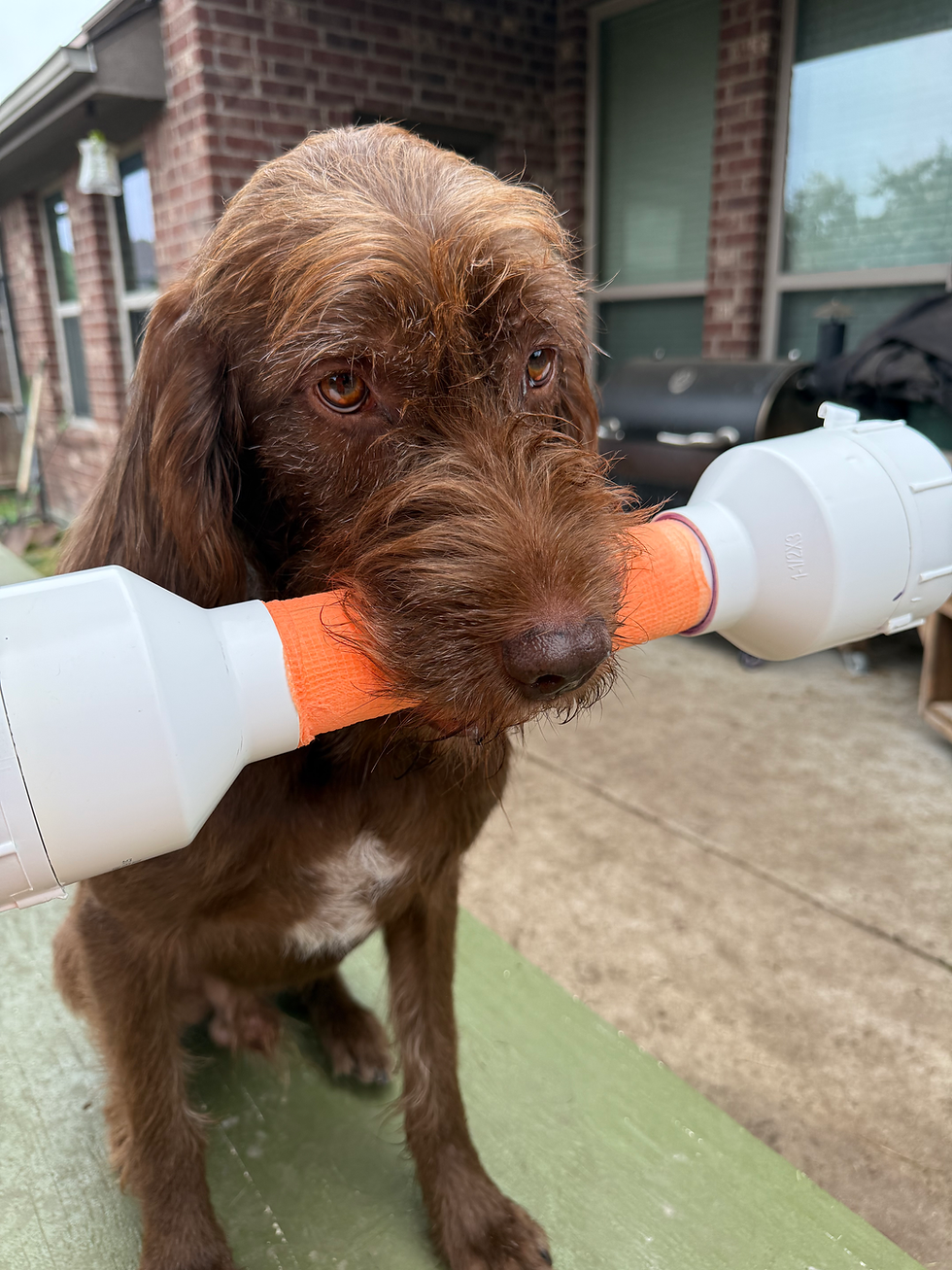
Trained retrieve builds a reliable hold, return, delivery, and release. It teaches the dog to finish the retrieve when the water is cold, the bird is difficult, or the cover is thick.
For many hunting dogs, this becomes the foundation for more difficult marks, blinds, tracking, and water work.
Steadiness
Steadiness teaches the dog to remain under control through the flush, shot, fall, or release standard chosen by the owner.
The goal is control without removing intensity.
A steady dog should still point with confidence and stay mentally involved with the bird.

Duck search and advanced water work
Duck search develops water confidence, independence, persistence, nose use, and cooperation.
The dog learns to search without depending on a visible fall or constant direction from the handler.
Advanced water work may also include difficult entries, cover, longer swims, handling, and realistic hunting setups.
Tracking and recovery
A versatile hunting dog may need to follow a wounded bird or animal through cover using scent rather than sight.
Tracking requires patience, concentration, and confidence in the nose.
The exact work depends on the type of hunting and the dog's breed and ability.
Handling and directional work
Some owners want the dog to stop remotely, take directional casts, complete blind retrieves, or adjust its search based on the handler.
That level of handling should be built on clear basic communication.
A dog that does not understand the stop or recall close to the handler is not ready for reliable remote control at a distance.
Honoring and working around another dog
Advanced dogs may need to remain steady when another dog points, retrieves, or is sent.
That adds excitement and competition.
The dog must learn that another dog's movement does not automatically release it.
Testing can provide a framework
NAVHDA and HRC offer useful standards, but they measure different kinds of work.
NAVHDA Utility is designed around the versatile dog. HRC programs focus on increasingly advanced retriever work.
Training can use those standards without turning every dog into a test project. Practical hunting remains the main goal for many owners.
Advanced does not mean rushed
Owners sometimes assume advanced training means more pressure and harder drills.
I see it differently.
Advanced means the dog understands more, can perform in more places, and can take greater responsibility.
Pressure should not replace teaching. The dog also needs enough mental and physical maturity for the work.
Timelines vary
A dog with strong obedience, bird experience, water confidence, and retrieve mechanics has a different path from one learning several of those areas at once.
Wild birds, weather, cover, water, and hunting pressure also reveal things controlled setups cannot.
Progress should be measured by performance and understanding, not only by time in the kennel.
At Stohner Kennels, advanced hunting development is built around the dog's starting point and the owner's hunting or testing goals.
Contact me to discuss what your dog already knows and what you want it prepared to do.

Comments