How to Choose the Right Bird Dog Trainer

Updated: Aug 9
Sending a bird dog away for training is a big decision.
You are trusting someone with your dog, your money, and a large part of your future hunting experience. A good trainer can bring out the dog's ability and give the owner a clear plan. The wrong fit can waste time and create problems that take longer to repair.
A polished website and a low price do not tell you enough.
Here is what I would ask.
Ask what the training is built on
Every trainer has a system.
The trainer should be able to explain what the dog is learning and why in plain language. You should not need to understand a stack of training terminology to know what will happen to your dog.
My own work includes marker training, free shaping, NePoPo principles, pressure and release, and trained retrieve methods influenced by Freddie King.
Those influences matter, but the name of a method is not the finished product.
I want a dog that understands the job, stays engaged, and can perform when hunting gets difficult. I do not want a dog that only looks obedient because it is worried about making a mistake.
Ask how pressure is used
Serious bird dog training uses pressure in some form.
It may involve a leash, check cord, physical guidance, restraint, place work, or an electronic collar after the foundation is clear.
The important question is whether the dog understands how to turn the pressure off.
Pressure should not be random. It should not punish confusion. Timing should be clear enough that the dog can connect its decision with the result.
A trainer should be able to talk openly about when pressure is introduced, what the dog already knows at that point, and how the response is evaluated.
Ask whether every dog gets the same program
A trainer needs a system, but dogs are not identical.
One dog may have plenty of drive and need cooperation. Another may be naturally cooperative but need confidence around birds or water. One dog may retrieve everything and avoid delivery. Another may not want to pick up a bird at all.
Age, health, temperament, genetics, prior training, and the owner's goals all change the plan.
Be cautious if every dog is promised the same result on the same timeline before the trainer has evaluated it.

Watch dogs work
Photographs of dogs holding birds are easy to collect.
Watching a trainer handle a dog tells you more.
Look at whether the dog understands the work. Watch how it responds after a mistake. Does the trainer help the dog find the answer, or does the session turn into a fight?
A dog can be physically still while mentally shut down. A dog can also be excited and intense while remaining cooperative.
I want a dog that is thinking and working with the handler.
Ask what the trainer will not promise
An honest trainer should be able to say no.
Not every dog has the natural ability, temperament, or physical condition to reach every goal. Training can improve performance and reliability, but it cannot manufacture unlimited talent.
If a trainer promises a finished result without seeing the dog, ask more questions.
Ask who will communicate with you
Training does not always follow a straight line.
A dog may struggle with part of the retrieve, become worried in water, develop a health issue, or show a behavior nobody expected.
When that happens, you should be able to talk directly to the person who saw it.
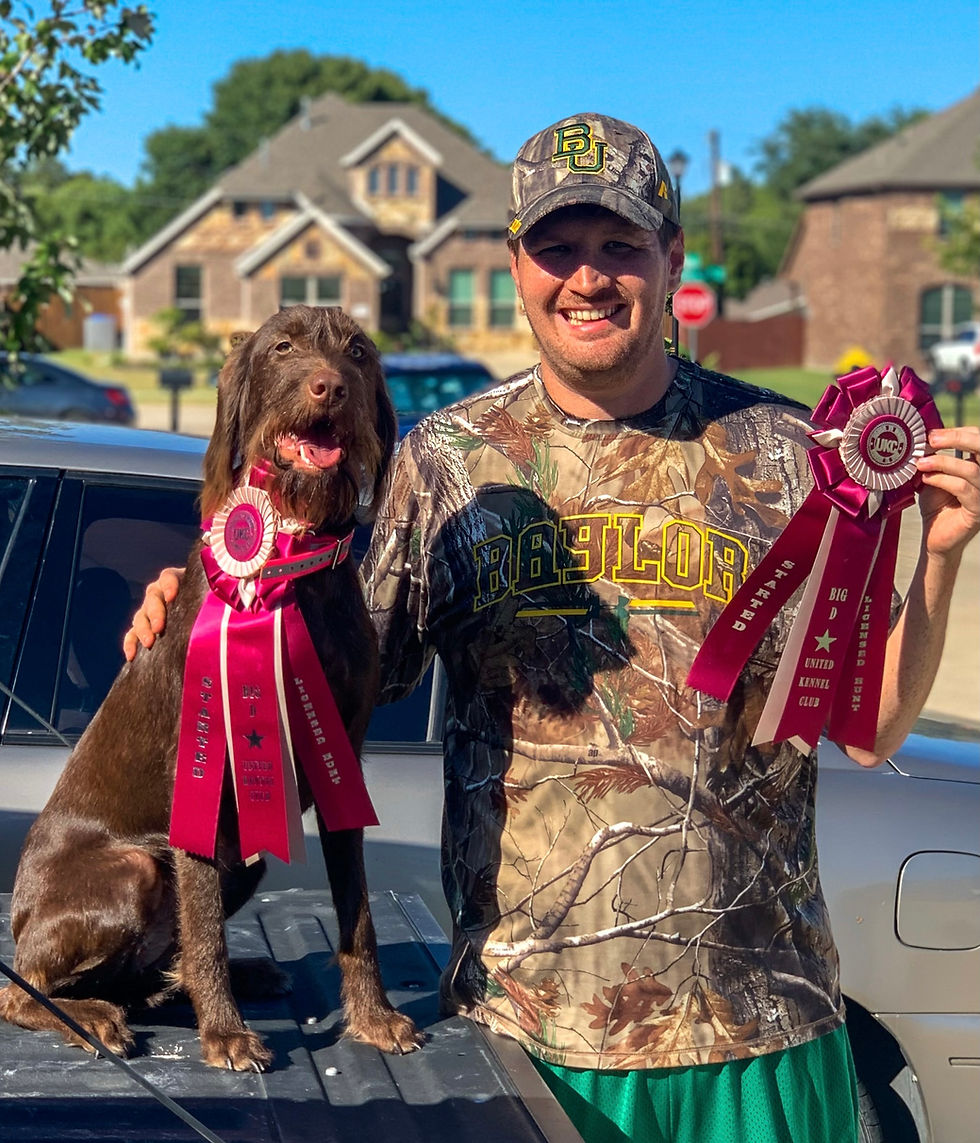
At Stohner Kennels, I personally handle the training dogs and communicate with their owners. I can tell you what I saw, why I think it happened, and what I plan to do next.
Ask what happens when the dog goes home
A dog can work well for a trainer and lose the standard when the owner changes the rules.
The handoff is part of the training.
Owners need to know the cues, equipment, expectations, and amount of freedom the dog has earned. They also need to understand what is not finished yet.
Without owner follow through, even good training can fade.
Choose the trainer who fits the dog
The best bird dog trainer is not automatically the closest, cheapest, or most decorated.
It is the trainer whose methods make sense to you, who is honest about your dog, and who prepares you to maintain the work.
Contact Stohner Kennels to discuss your dog's age, breed, experience, and hunting goals. I will tell you whether my program sounds like the right fit.


Comments